


In Pennsylvania, when families are looking for personal care for their loved one, they’ll often search for an assisted living vs. personal care community. If adult children are looking for skilled nursing care, they’ll search for a nursing home instead of a skilled nursing facility thereby overlooking all available options.
Assisted living and personal care are two different terms in PA. Personal care offers 24/7 non-medical support with everyday tasks like bathing and dressing and provides 3 daily meals, housekeeping and linen service, including medication management, under licensed nurse oversight. Skilled nursing offers the same services but adds medical care around the clock for people with more complex health needs.
At United Zion Retirement Community in Lititz, we offer both on one campus. This guide explains what each includes, how each is paid for, and how to tell which one fits your loved one.
What Personal Care Includes
Personal care is for older adults who find that living alone at home or in an apartment has become difficult. It provides support with activities such as bathing, dressing, and medications while protecting as much independence as possible.
At United Zion, personal care services include:
- Medication management
- Help with bathing, dressing, and other personal needs
- Three meals a day
- Housekeeping and linen service
- Staff available 24/7
Licensed nurses oversee care, with support from medication technicians, certified nurse aides, and resident aides. Residents live in private rooms or private two-room suites, each with its own bath, a few steps from the dining room and close to the social life of our campus.
Personal care itself is non-medical, but residents are not without medical support. On-campus medical services may include a primary care physician, outpatient physical, occupational, and speech therapy, blood work, and X-rays. Personal care residents must be 62 or older.
Daily life is full, too. Residents can join recreational, educational, wellness, and spiritual programs, from Bible study and book club to crafts, trivia, and chapel services. We visit an area restaurant once a month and our residents enjoy a country drive as well.
Pennsylvania licenses personal care homes and assisted living residences separately, according to the Pennsylvania Department of Human Services, so the two terms are not interchangeable here. Learn more about personal care at United Zion.

What Skilled Nursing Includes
Skilled nursing combines 24-hour medical care with hands-on assistance to support daily living and mobility needs. We offer skilled nursing, rehabilitation rooms and we offer long-term nursing care.
Registered nurses (RNs) oversee care in the Healthcare Center, with direct care from licensed practical nurses (LPNs) and certified nurse aides (CNAs). Because residents need more hands-on care, the Healthcare Center has a higher ratio of staff to residents than personal care.
Every room is private. Rooms are grouped into neighborhoods of 12 to 17 residents, and each neighborhood has its own living room with a fireplace, dining room, and kitchen with a home-like feel.
Short-term rehabilitation helps people regain as much independence as possible after a hospital stay, surgery, or injury. Long-term care serves people whose medical needs call for ongoing nursing. With dedicated activity staff, we offer activities such as music, crafts, fitness classes, and Bible study, flower arranging
Skilled nursing at United Zion includes:
- On-site physical, occupational, and speech therapy
- Short-term rehabilitation after a hospital stay, surgery, or injury
- Long-term care for ongoing medical needs
- Respite care
- End-of-life hospice care
- Chapel services at least six times a week
How Personal Care and Skilled Nursing Are Paid For in Pennsylvania
Cost is one of the biggest differences between a skilled nursing facility and personal care. Here is how coverage works for each level in Pennsylvania:
Personal care is paid for with personal resources, and we welcome long-term care insurance. Pennsylvania does not allow Medicare or Medicaid funding for personal care, although some veterans benefits may apply. At United Zion, personal care is billed monthly.
Skilled nursing has more payment options. United Zion is certified for both Medicare, and if needed, in the future, Medicaid; we work with long-term care insurance too. For those who qualify, VA benefits can help supplement the cost, and residents are billed monthly.
According to Medicare.gov, Medicare covers skilled nursing only after a qualifying inpatient hospital stay of at least three days in a row. Time spent under observation in the hospital does not count toward those three consecutive days, so ask the hospital team about your loved one’s status.
If your loved one has a Medicare Advantage plan, the rules can differ. Some plans waive the three-day hospital stay, and coverage may vary by network, so consult with their health insurance plan before admission.
Medicare also requires a need for daily skilled care, and it covers up to 100 days in each benefit period. In 2026, you pay nothing for covered services in the first 20 days and $217 a day for days 21 through 100.
Medicare does not cover long-term care. For a longer stay, families must use Long Term Care insurance if they have a policy or pay privately. When funding is running out, they may turn to Medicaid or additional personal resources. We have financial eligibility requirements, including expectations regarding private-pay resources before transitioning to Medicaid, which are reviewed as part of the admissions process. At United Zion, our guide to paying for senior living in PA walks through these options in more detail.
Rates for personal care and skilled nursing are shared in our information packets rather than online. Request information to receive current pricing for your loved one’s level of care.
What Happens When Needs Change
Care needs often change over time, and moving to a new level can feel overwhelming. Because personal care and skilled nursing share one campus in Lititz, a change in care does not mean starting over somewhere new.
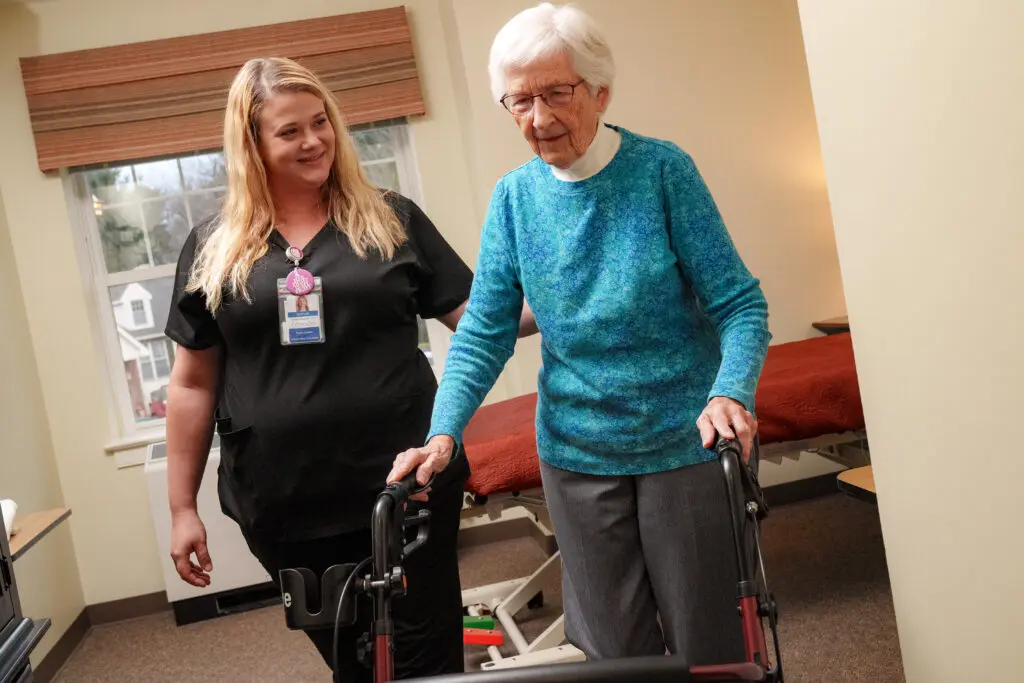
Current United Zion residents receive priority access to both our Personal Care and the Healthcare Center. A resident who needs short-term rehab after a hospital stay can receive it close to familiar faces and the community they already call home.
Couples benefit from this setup as well. If one spouse needs care and the other does not, our campus offers several levels of living. Visitors are always welcome in both Personal Care and the Healthcare Center.
You do not need to live at United Zion to apply for a higher level of care. We also welcome people coming from home or from the hospital. Applying early lets us tell you when a room becomes available.
Not Sure Which Level Fits?
Weighing personal care vs. nursing care for someone you love is a big decision, and you do not have to make it alone. Our admissions team can talk through your loved one’s needs and help you find the right level of care.
Getting started takes three steps: request information, schedule a visit, and submit an application.
Request Information or call us at 717-626-2071. You are also welcome to schedule a visit to see Personal Care and the Healthcare Center in person.

Frequently Asked Questions
Is a skilled nursing facility the same as a nursing home?
Yes, the two terms mean the same thing. When families weigh nursing home vs. assisted living, they are really comparing around-the-clock medical care with non-medical help for everyday tasks.
What is the difference between assisted living and a nursing home?
The assisted living vs. nursing home choice comes down to medical care. A skilled nursing facility provides medical care at all hours, while the daily help many Pennsylvania families mean by assisted living is often provided through personal care.
Does Medicare pay for personal care?
No. Pennsylvania does not allow Medicare or Medicaid funding for personal care. Long-term care insurance and some veterans benefits may help with the cost, and our admissions team can walk you through your options.
How long will Medicare pay 100% of a skilled nursing stay?
For covered services, you pay nothing for the first 20 days. For days 21 through 100, you pay a daily coinsurance of $217 in 2026, and Medicare coverage ends after 100 days in a benefit period.
Can someone move from personal care to skilled nursing?
Yes. Because both levels are on one campus, residents can move to skilled nursing if their needs change. Current United Zion residents receive priority access to the Healthcare Center.