

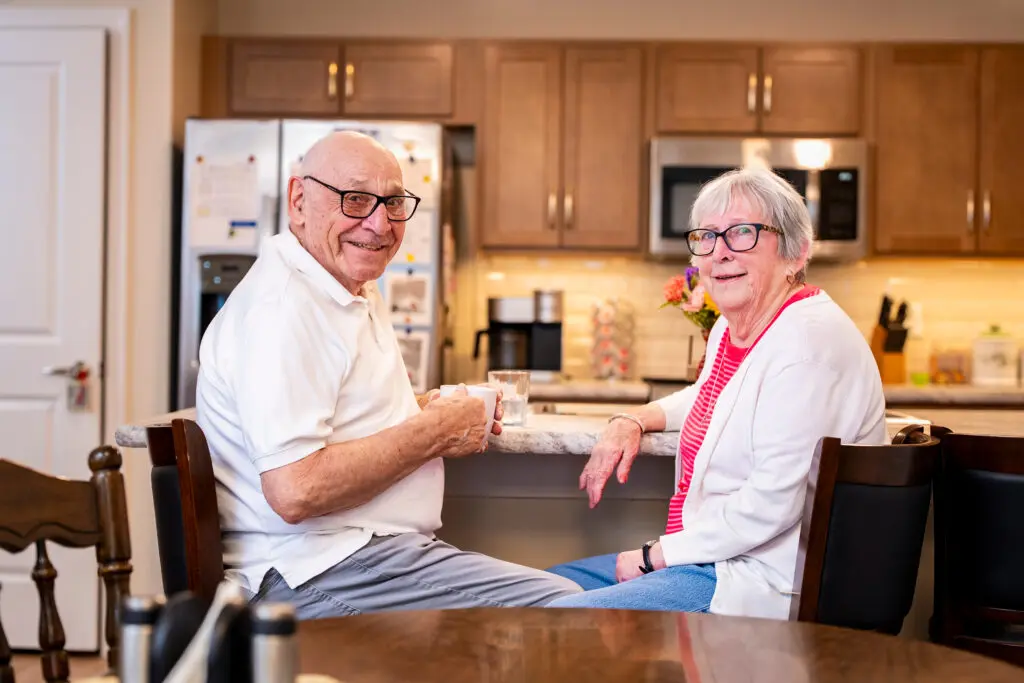
Growing older together means navigating unexpected changes. One spouse may continue living independently while the other requires additional support after an illness, surgery, or chronic health condition.
If you’re researching senior living for couples with different care needs, you’re likely asking one important question: Can we stay together even if our care needs change?
The answer depends on the type of retirement community you choose. A continuing care retirement community (CCRC) offers multiple levels of care on one campus, making it easier for couples to remain close while each person receives the support they need.
Instead of relocating to different facilities or making rushed decisions during a medical crisis, couples enjoy a plan that adapts as life changes.
For many older adults, that’s one of the greatest advantages of choosing a continuing care retirement community. One spouse may continue enjoying an active, independent lifestyle while the other receives personal care, rehabilitation, or skilled nursing care nearby.
Although living arrangements sometimes change, couples can continue sharing meals, participating in activities, attending worship services, and spending meaningful time together. Understanding how these communities support couples makes it easier to plan for the future with confidence.
Why Couples May Need Different Levels of Care

No two people experience aging the same way. Even spouses, who have shared decades together, may face different health challenges as they grow older.
A variety of circumstances influence changing care needs, including:
- Recovery after joint replacement or another surgery
- Parkinson’s disease
- Stroke recovery
- Arthritis that limits mobility
- Heart or respiratory conditions
- Progressive memory loss
- Frequent falls or balance concerns
Some changes happen suddenly: A fall may lead to rehabilitation followed by several weeks of additional support before returning home. Other changes develop gradually as everyday tasks become more difficult to manage independently.
In many households, the healthier spouse naturally assumes the role of caregiver. They prepare meals, organize medications, drive to medical appointments, manage household responsibilities, and provide personal support throughout the day.
While these responsibilities begin with good intentions, they frequently become physically demanding and emotionally exhausting.
Caregiving also changes the relationship between spouses. Time once spent enjoying retirement together gradually shifts toward managing appointments, medications, and daily routines. Many caregivers postpone their own medical appointments, hobbies, or social activities because someone depends on them every day.
Planning ahead changes that experience. Instead of waiting until an emergency forces difficult decisions, couples enter a community that already offers multiple levels of care. They establish friendships, become familiar with the campus, and settle into a comfortable routine before additional support needs potentially arise.
When health needs change, the transition feels less disruptive because both spouses already belong to the same community.
How Continuing Care Retirement Communities Support Couples
A continuing care retirement community offers more than one housing option. It provides a continuum of care services that evolves alongside residents’ needs, allowing couples to remain part of the same community even when one spouse requires additional care.
Many couples begin in an independent living apartment or cottage, where they enjoy a maintenance-free lifestyle, social opportunities, wellness programs, and the freedom to spend more time doing the things they enjoy.
Down the road, should one spouse require personal care, that transition doesn’t automatically mean leaving the community or starting over somewhere new.
Instead, the spouse receiving additional support may choose in-home care or alternately, decide to move to a higher level of care. This balance honors personal needs and protects a lifetime bond.
Temporary health changes work much the same way. After a hospitalization or orthopedic surgery, a rehabilitation stay provides focused therapy and nursing services before residents return home. Because rehabilitation takes place within the same community, couples avoid the added stress of traveling between unfamiliar facilities during recovery.
Some residents may eventually require skilled nursing care for ongoing medical needs. Even then, remaining on the same campus allows spouses and family members to maintain familiar routines and spend more quality time together without the need to travel.
Rather than forcing couples into an all-or-nothing decision, a continuing care retirement community recognizes that each person’s health may follow a different path. The community can meet those changing needs while preserving stability, familiarity, and connection.
Maintaining Daily Life Together
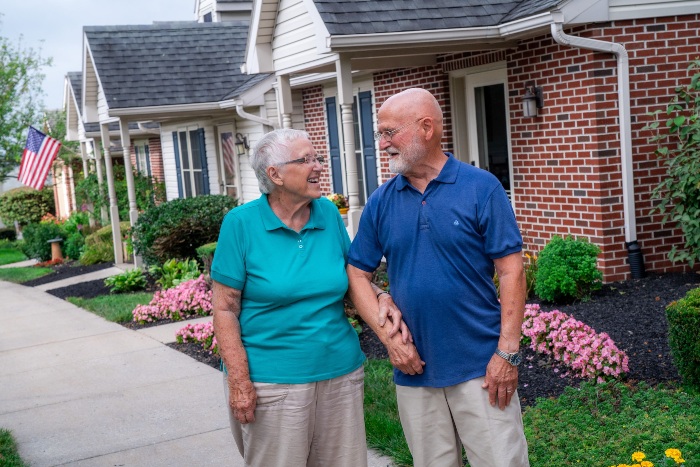
Moving to a different level of care doesn’t erase decades of shared routines. Couples still look forward to seeing one another, celebrating milestones, and spending time with family and friends.
Many continuing care retirement communities encourage spouses to remain involved in each other’s lives through opportunities such as:
- Frequent visits
- When feasible, sharing meals together
- Attending worship services as a couple
- Participating in social events and recreational activities
- Celebrating birthdays, anniversaries, and holidays
- Taking walks or enjoying outdoor spaces together
These everyday moments matter. They preserve a sense of normalcy during a period of transition and reinforce the relationship beyond caregiving responsibilities.
Likewise, adult children find reassurance in knowing both parents remain part of the same community. Rather than coordinating visits to multiple locations, families enjoy spending time together.
Coordinated Care Reduces Stress
A continuing care retirement community shifts those clinical responsibilities to experienced professionals.
The care team keeps everyone informed. Nurses monitor health changes, therapists oversee rehabilitation, and staff coordinate with physicians and family members to ensure everyone understands the resident’s care plan.
Questions to Ask When Touring a Retirement Community
- What type of contract do you offer (Life Care, Life Plan, Modified, or Fee-for-Service)?
- Are entrance fees partially or fully refundable?
- Under the contract, what specific health services are guaranteed?
- How do monthly fees adjust if I move to a higher level of care?
- How does the community handle transitions from independent living to a personal care, memory care, or skilled nursing?
- If desired, can outside home health or hospice providers come to my home?
- Is there an annual increase in monthly fees?
- May I see a copy of your financial disclosure statement?
- If I run out of money, through no fault of my own, what happens?
Looking Ahead with Confidence
If you’re exploring retirement living in Lancaster County, schedule a tour of United Zion Retirement Community to learn how a continuing care retirement community supports singles or couples through every stage of life.
Seeing the campus, meeting the staff, and asking questions in person provides the confidence families need to make an informed decision.
Frequently Asked Questions
Can couples stay together if one spouse needs personal care?
Yes. Many continuing care retirement communities allow one spouse to remain in independent living while the other receives personal care on the same campus or at home.
What happens if one spouse needs skilled nursing care?
If ongoing medical support becomes necessary, the spouse requiring skilled nursing care transitions to that level of service, while the other may continue living independently. Remaining within the same community makes visiting easier and allows couples to maintain many of their daily routines.
Is a continuing care retirement community a good choice for couples?
Yes. A continuing care retirement community offers multiple levels of care in one location, allowing each spouse to receive appropriate support as needs change without relocating to a different organization.
How do retirement communities coordinate care for couples?
Care teams typically work together to coordinate nursing services, rehabilitation, physician communication, and care planning. Family members receive updates and staff collaborate to ensure each resident receives individualized care while supporting the couple’s relationship.
When should couples begin planning for future care needs?
The best time to explore retirement community options is well before additional care is potentially necessary. Planning early provides more choices, reduces stress during unexpected health changes, and allows couples to establish friendships and routines in their new home.